I have driven the road to Fontein Cave more times than I can count, and the same small drama plays out every time: the tarmac runs out somewhere past Santa Cruz, the suspension starts its rattle, and whoever is in the passenger seat asks whether we have taken a wrong turn. We have not. Getting into Arikok National Park is straightforward, and the last eight kilometres inside the park are the bit that rewards a bit of planning. That is what this page is for.
The One-Minute Answer: What Getting to Fontein Cave Really Involves
Your visit splits into three parts. You drive to a park gate on public roads, you cross the park itself on gravel and graded dirt, and then you walk the final few hundred metres to the cave mouth. Only the middle part needs thought, and even that is a matter of choosing your wheels and your timing.
Three options make practical sense. Self-drive in a rental car is the default for independent travellers and the cheapest by a wide margin. A taxi works if you book the return leg at the same time and agree a waiting window before you leave your hotel. A guided jeep safari or a private transfer removes the driving altogether, which suits cruise passengers and anyone unwilling to test a rental agreement on unpaved park roads.
A fourth option exists on paper only. Arubus runs a clean, cheap network along the coast, and no service enters Arikok. A bus to Santa Cruz leaves you with a hot, exposed walk of well over an hour to reach the gate. I did it once, in February, and I have not repeated it.
The trap is easy to describe. The first fifteen kilometres from Oranjestad are motorway and dual carriageway, and you will wonder what everyone complains about. The final eight kilometres are dirt, corrugated in places, and that is where all the planning lives. My Fontein Cave map and location page carries the coordinates and the offline notes you will want before the phone signal drops.
The first fifteen kilometres lull you into complacency. The last eight are where the planning earns its keep.
Where Fontein Cave Sits Inside Arikok
The Position
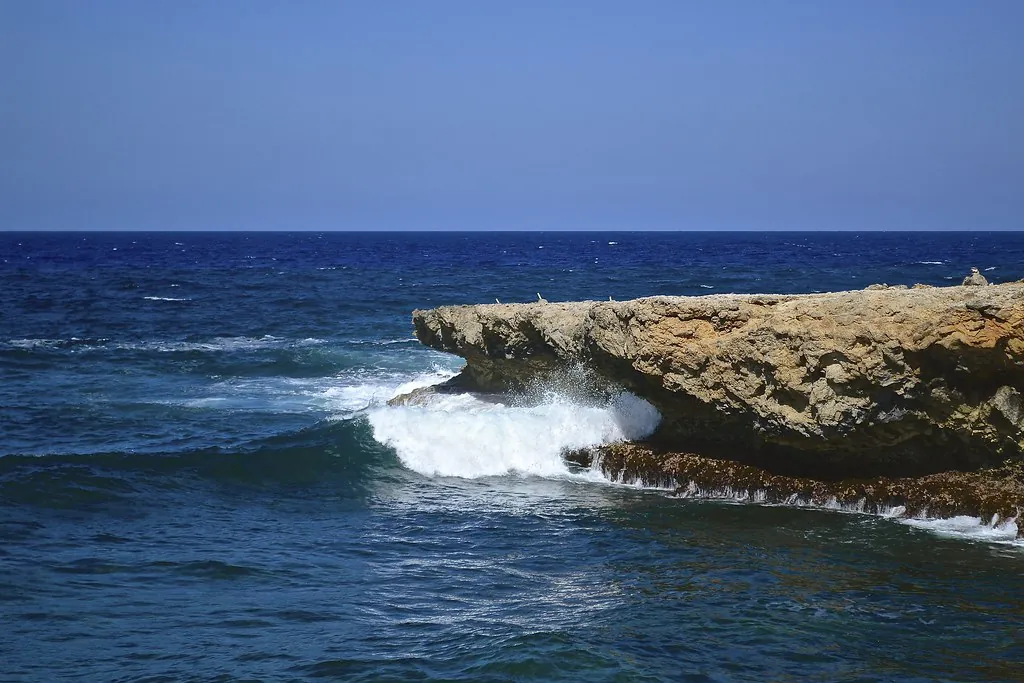
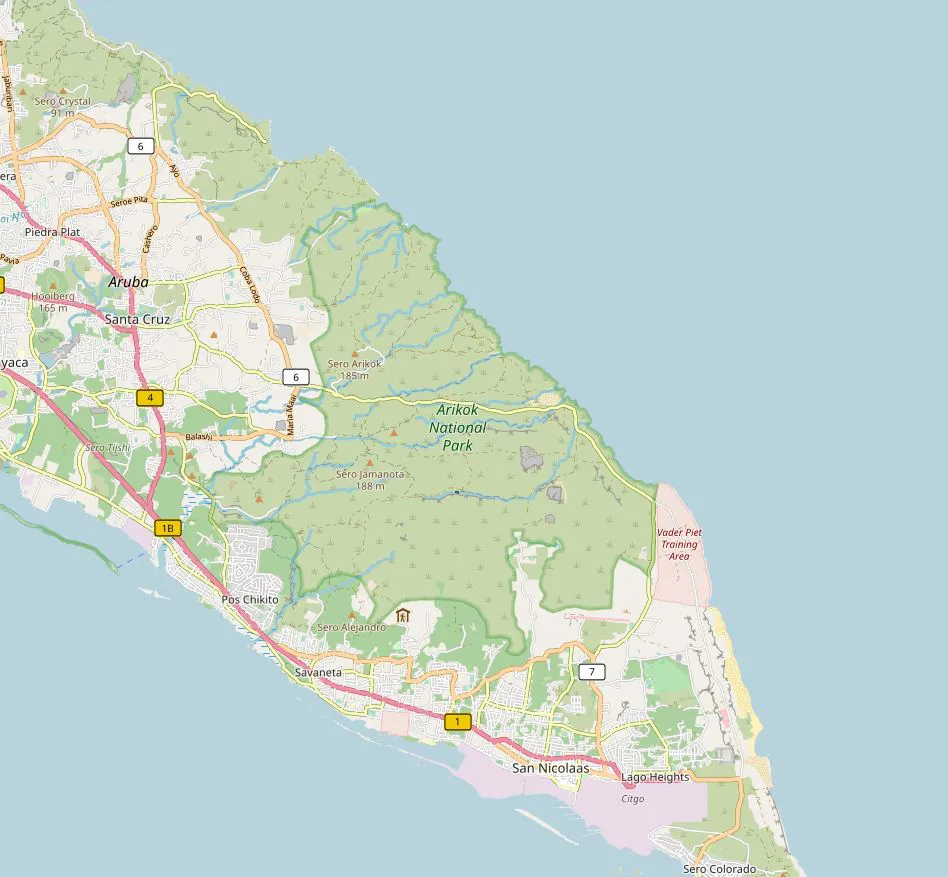
Fontein Cave faces the northeast coast, roughly fifteen minutes by car from the San Fuego entrance on a dry day. My handheld GPS reads about 12.53° N, 69.92° W at the car park, give or take a few metres of cactus scrub. The cave mouth sits just above the old Fontein plantation ruins, which is why the name stuck: fontein is the Papiamento word for fountain, and there was once a freshwater spring here that made the whole stretch habitable.
The Neighbours
Quadirikiri and Guadirikiri sit far closer to the entrance and take most of the traffic. The Natural Pool (Conchi) lies further on, out along the rough coastal track that eats tyres and patience. Fontein is the outlier of the group, which is precisely why the Arawak drawings inside it are still in the condition they are. My comparison of Aruba’s caves sets out which ones suit which sort of day.
Position matters because Fontein is not a drive-up-and-park-at-the-door site. It is, though, one of the more forgiving cave approaches in the park: the walk in is short, the ground is level for most of it, and there is no scramble up a limestone slope to reach the entrance. Arriving by aruba fontein cave standards is about patience with the road, not fitness.
Park Gates, Opening Hours and Entry Fees
San Fuego is the gate you build your day around. It sits on the Santa Cruz side, north of town, announced by brown Arikok signs well before the turn-off. A second coastal access can open seasonally, and the surface there is rough and unreliable enough that I would not plan a first visit around it. Treat San Fuego as the front door.
Opening hours run roughly 8:00 to 16:00, with last vehicles admitted around 15:30. The park closes on certain public holidays, and the schedule shifts slightly through the year. The Aruba National Park Foundation publishes the current times, and it is worth a look the night before you drive.
- Entry runs about US$11 to US$14 per adult (roughly €10 to €13), with children at roughly half. The fee covers the whole park for the day, so Guadirikiri and Quadirikiri come free once you are through the gate.
- Fontein Cave sometimes has a ranger on hand who will walk you in for a small gratuity of a few dollars. This is the one detail I would confirm at the booth rather than trust to any blog, including mine, because staffing changes with the season.
- Bring small notes. Card machines work at the gate, and cash is quicker when a jeep convoy pulls in ahead of you.
- The visitor centre near San Fuego has toilets, water and a shaded bench. There is nothing else inside the park boundary, so this is your last stop for supplies.
- No overnight parking anywhere inside Arikok. The gate staff will not bend on this one.
Two pages go deeper than this one: Arikok National Park and the cave pool status covers what else is worth seeing once you are in, and Arikok fees and entry tips unpicks the ticket maths if you are travelling as a family or arriving on a cruise.
Travel Times, Distances and Costs at a Glance
| Origin | Distance to San Fuego gate | Typical drive time | Notes |
|---|---|---|---|
| Oranjestad and the cruise terminal | About 20 km | 30 to 35 minutes | Dual carriageway the whole way |
| Noord and Palm Beach | About 25 km | 35 to 45 minutes | Inland route via Paradera is quicker |
| Eagle Beach | About 22 km | 30 to 40 minutes | Join the highway east of Oranjestad |
| Queen Beatrix International Airport (AUA) | About 20 km | 25 to 30 minutes | Straight run northeast |
| San Nicolas or Savaneta | About 28 km | 40 to 50 minutes | Longest haul, plan a full morning |
| San Fuego gate to the Fontein Cave car park | About 8 km | 15 to 20 minutes | Gravel and corrugated dirt |
| Park entry, per adult | Not applicable | Not applicable | Roughly US$11 to US$14 (about €10 to €13) |
Taxi figures sit in the section below, and they sting. A return fare from the hotel strip often costs more than two days of car hire, which is worth knowing before you book anything.
Step-by-Step Driving Directions
From Oranjestad and the Cruise Port
- Leave Oranjestad heading east on the main highway signed for Santa Cruz and San Nicolas. This is the easy part: four lanes, no junctions to argue with.
- After roughly 12 km, leave the highway and turn left following the brown Arikok National Park signs posted before Santa Cruz.
- Follow the two-lane road north through dense cacti towards San Fuego. The gate and pay booth sit at the end of it.
- Pay your entry, take the paper map even if your phone has one, then follow the internal gravel road signed for Fontein and Conchi.
- About 8 km in, watch for the small marker and the earth car park on your left. Miss it and you will end up at the coastal track, which is a different sort of afternoon.
If you are arriving by ship, add twenty minutes for port traffic and tender queues before the drive even starts. On a 5pm sailing I would be back at the terminal by 2:30pm at the latest, which means leaving the cave around 1pm. Cutting it finer than that is how people end up watching their ship from the quayside.
From Noord, Palm Beach and Eagle Beach
You have a genuine choice here, which Oranjestad-based visitors do not. The obvious route drops south to Oranjestad and joins the highway, and it takes the best part of an hour in morning traffic. The better one cuts inland through Paradera, skips the capital entirely, and knocks a solid ten minutes off the run. Turn inland at the roundabout signed for Paradera, keep heading east through the village, then pick up the Santa Cruz road and the Arikok signs.
Hotel-strip renters lose that ten minutes compared with anyone staying in Oranjestad, purely because of where the road network starts. If you are weighing up accommodation, that is a small point in the capital’s favour, though the beaches are considerably better where you are.
From the Airport and the South
Out of Queen Beatrix International Airport, join the eastbound highway and stay on it until Santa Cruz, then follow the brown signs north to San Fuego. Twenty-five to thirty minutes in clean traffic. On arrival day, add the time you will actually spend collecting luggage, queueing at the rental desk and remembering how to drive on the right, and you are looking at ninety minutes from wheels-down to cave mouth. I would not attempt it on a late-afternoon landing. See the official airport site for current arrival halls and car hire locations.
From San Nicolas, Savaneta or Baby Beach, head north up the coast road and then west towards Santa Cruz. It is the longest run on the island to reach Fontein, forty to fifty minutes, so guests staying in the southeast should plan a full morning rather than a quick dash.
Vehicle Choice and Rental Insurance Realities
A small hatchback will physically get you to Fontein in dry weather. Whether your rental agreement permits you to take it there is a separate question, and the answer catches people out every single week.
What You Actually Need
- Economy hatchback: fine on the graded sections, unhappy on corrugations, and ground clearance is the worry rather than grip.
- Compact SUV or crossover: the sweet spot for the San Fuego to Fontein road, comfortable for four with bags.
- Full 4×4: only necessary if you are continuing to Conchi or the coastal track beyond.
- UTV or ATV: permitted on marked park routes and not on hiking trails. Dusty work, and check the current park rules before you hire one for a cave day.
The Insurance Wrinkle
Plenty of Aruban rental contracts void third-party cover the moment your tyres touch an unpaved road. Read that clause properly, or ask at the desk and get the answer in writing. Photograph the car before and after, including the underbody if you can crouch low enough. Then fill the tank before Santa Cruz, because there is no fuel of any kind inside the park boundary.
Taxis: Fixed Fares and the Waiting Problem
Aruba’s taxis run on government-set zone rates, not meters, and drivers take both cash and card. A one-way run from Oranjestad to the San Fuego gate lands somewhere around US$40 to US$50; from Noord or Eagle Beach, US$45 to US$55; from the airport, US$40 to US$50. Those are the rates I hear quoted most often, and they shift with fuel prices, so confirm before you get in.
The real problem is the return. There is no taxi rank inside Arikok, phone signal is patchy once you are past the gate, and a fair number of drivers will not take their vehicle down the unpaved section to Fontein at all. If you go by taxi, agree the whole arrangement at your hotel: fixed price for both legs, a set waiting window of two to three hours, and a clear meeting point at the car park. Anyone who will not commit to that is not the taxi you want. Aruba.com lists licensed operators and current zone guidance.
Nearly every stranded visitor I have met at the San Fuego gate arrived by taxi and assumed a ride home would simply appear. It does not. Book the return, or drive yourself.
Arubus, Fares and the Last Mile
Arubus is genuinely good value and genuinely useless for this particular trip. A single ride costs around AWG 2.60, roughly US$1.50, and a day pass around AWG 10, about US$5.60. The Oranjestad terminal sits a short walk from the cruise port, and buses run regularly to Santa Cruz and on to San Nicolas. None of them enters the park.
The nearest practical drop-off is Santa Cruz, which leaves you eleven or twelve kilometres from the gate with no shade and no pavement. You could take a taxi from there, and at that point you have spent more than a rental car would have cost you. Arubus is superb for Eagle Beach and the capital. For the cave, it is painful. Timetables live on the Arubus website.
Arrival Logistics: Parking, the Walk In and Accessibility
Parking and the Walk
The car park at Fontein is unpaved earth with room for roughly a dozen vehicles and no shade at all. The walk to the cave mouth takes two to three minutes, mostly flat, with a short stretch of loose limestone underfoot. Sturdy closed shoes matter more than people expect. Flip-flops on that surface are a rolled ankle waiting to happen.
Accessibility Notes
Fontein is not wheelchair accessible in any formal sense. The approach is uneven, and inside there are low sections where you will duck and a couple of shallow steps. Visitors with limited mobility should come with a companion, take the walk slowly, and aim for the first hour after opening when the ground is cool and the light entering the mouth still helps you see.
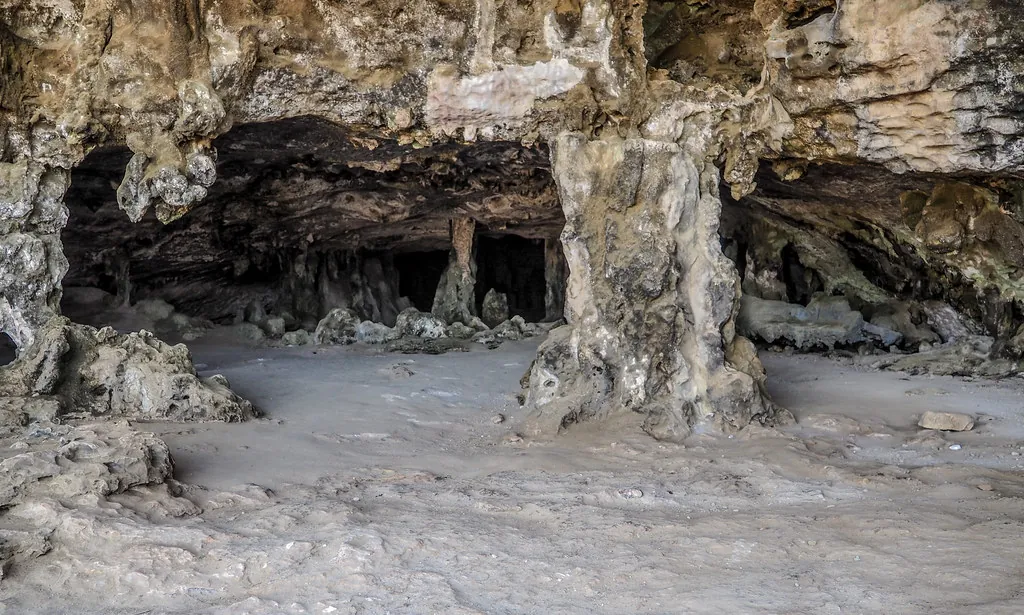
Take a headtorch. Phone torches are weak and you will want both hands free to steady yourself, and the ranger’s lamp is the only other light in there. My photography and formations page covers how to shoot the place without a flash, and the visitor rules page sets out why nobody touches the drawings, however tempting the light makes it.
Timing, Heat and When to Arrive
The jeep convoys tend to reach Fontein between 10:00 and 13:00, and three of them at once turns a quiet cave into a queue at the entrance. Get to the San Fuego gate for opening at 8:00, and you will likely have the drawings to yourself for a good half hour. That half hour is the difference between a proper look at the petroglyphs and a shuffling glimpse over somebody’s shoulder.
Midday heat is a faff, there is no gentle way to put it. The car park has no cover, and the sun on that limestone is fierce by eleven. Carry one and a half to two litres of water per person, wear a hat, and remember that air conditioning in the car will make you feel far better than you actually are.
Guided Options and Private Transfers
If the driving sounds like more hassle than it is worth, several operators run Arikok jeep safaris that include the caves and collect you from your hotel. The B&H AM Tour caves and Natural Pool run is a half-day morning trip at around US$105, and the Arikok Jeep Safari Adventure covers the fullest sweep of the park for about US$109. Both include park entry and pickup, which quietly solves the taxi problem in one booking.
For something closer to a private driver, the private half-day Arikok tour at around US$450 is priced for a group and lets you set the pace and the start time. Full options and cancellation terms sit on the tickets and tours page.
Things That Catch People Out
- Satellite navigation drops out inside the park boundary. Download the route and the map before you leave the hotel, and rely on the brown signs after that.
- Heavy rain closes sections of the internal road without much warning. If it has poured overnight, ask at the gate before committing.
- There is nowhere to buy water, food or fuel past San Fuego. Bring everything in and carry everything out.
- The Natural Pool swimming spot and the cave pool remain closed on environmental and safety grounds. Do not build your day around a swim, whatever an older blog tells you.
- Parking overnight is prohibited, so a sunset visit is not a realistic plan.
- Mobile signal is patchy between the gate and Fontein. Screenshot your return taxi driver’s number before you lose bars.
The Map, the Coordinates and the Last Word
Punch these into whatever you are using. San Fuego gate sits at roughly 12.487° N, 69.915° W, and Fontein Cave at roughly 12.531° N, 69.916° W. The dedicated map page has the walking route from the car park and the landmarks to look for on the way in, including the plantation ruins that tell you you are nearly there.
The drive in is not difficult. It is just unforgiving of assumptions: that the road stays sealed, that a taxi will wait, that your rental contract covers gravel. Sort those three things before you set off and the rest of the morning takes care of itself. The Arawak drawings have waited several hundred years, and they will still be there when you park up, torch in hand, twenty minutes before the jeeps arrive.