Fontein Cave Aruba: The Petroglyph Cave — Not the Swimming One
Small, dark and properly haunting, Fontein Cave holds Aruba’s oldest surviving rock art. Here’s exactly how to see it — and how to stop mixing it up with the cave-pool rumour.
Jump to the Key TakeawaysEssential Fontein Cave at a Glance (TL;DR)
Compare 2026 Ticket & Tour Options

★ ⭐ Top Choice
★ Best Overall Pick
Aruba Natural Pool and Indian Cave Rugged Jeep Safari
From
$99
(~€91)
via Viator
|

Top Customer Favorite
National Park Arikok Jeep Safari Adventures
From
$109
(~€100)
via Viator
|

Best All-Inclusive Combo
Safari Jeep Tour Adventure by B&H AM Tour - Caves & Natural Pool
From
$105
(~€97)
via Viator
|
Best Budget Choice
Natural Pool & Caves Off Road Safari
From
$95
(~€87)
via GetYourGuide
|
|---|---|---|---|
| Duration 4h 30min | Duration 4h 30min | Duration 4 hrs | Duration 4,5 hours |
| Transport Hotel pickup available | Transport Hotel pickup available | Transport Hotel pickup available | Transport Meeting point or pickup |
| Languages English, Nederlands, Español | Languages English, Nederlands, Español | Languages English, Nederlands, Español | Languages English |
|
Inclusions
✓ Lunch (morning tour only)
✓ Local guide
✓ Transport by open-air 4x4 vehicle
|
Inclusions
✓ Bottled water
✓ Use of Snorkel and Mask
✓ History on sight
|
Inclusions
✓ Local Snack
✓ Bottled water
✓ Complimentary pickup and drop-off
|
Inclusions
✓ Entrance to Arikok National Park
✓ Clean snorkel equipment
✓ Water
|
| Cancellation Free up to 24h before | Cancellation Free up to 24h before | Cancellation Free up to 24h before | Cancellation Free up to 24h before |
| Group Size Small Group Tour | Group Size Small Group Tour | Group Size Small Group Tour | Group Size Small / Standard Group |
| Ideal For First-time visitors & top highlights | Ideal For Travellers seeking highly recommended experiences | Ideal For All-in-one sightseeing with multiple admissions | Ideal For Cruise Travelers |
Aruba Natural Pool and Indian Cave Rugged Jeep Safari
National Park Arikok Jeep Safari Adventures
Safari Jeep Tour Adventure by B&H AM Tour - Caves & Natural Pool
Natural Pool & Caves Off Road Safari
📅 Live Availability — Check Dates
- Cheapest Option: Arikok National Park adult entry is €19.60 (~$22.00 / Afl. 39.00) — this covers the park and the cave; there is no separate Fontein Cave gate fee for independent visitors.
- Recommended Guided Experience: A ranger-narrated walk for the petroglyph context, or a bundled Arikok jeep safari (from €45 / ~$49) if you’d rather someone else wrestle the interior tracks.
- Advance Booking Window: Book jeep safaris 3–7 days ahead in high season (December–April and cruise-ship Wednesdays); the ranger-guided cave slot itself is first-come, first-served on-site.
- Cancellation Flexibility: Viator and GetYourGuide bookings carry 24-hour free cancellation; on-site purchases at the San Fuego entrance are non-refundable — including if the heat gets the better of you.
Bookable Arikok & Cave Tours
Sorted by relevance to Fontein Cave. Many operators bundle the cave with the Natural Pool, Quadirikiri and Baby Beach in a single half-day. Prices shown are current Viator rates; cave entry is usually folded into the park fee.
What Fontein Cave Actually Is (and Isn’t)
The petroglyph cave, full stop. Not the swimming cave. Not the Instagram cave. Not the one with the ladder.
Fontein Cave sits on the dry, wind-scoured north coast of Arikok National Park, tucked into a limestone bluff a few minutes’ drive from the San Fuego entrance. Its name comes from the Dutch fontein — fountain or spring — after the old plantation that once worked this stretch of scrub. And that’s your first clue that this is a cultural site rather than a geological thrill: water, history, people. Not snorkelling.
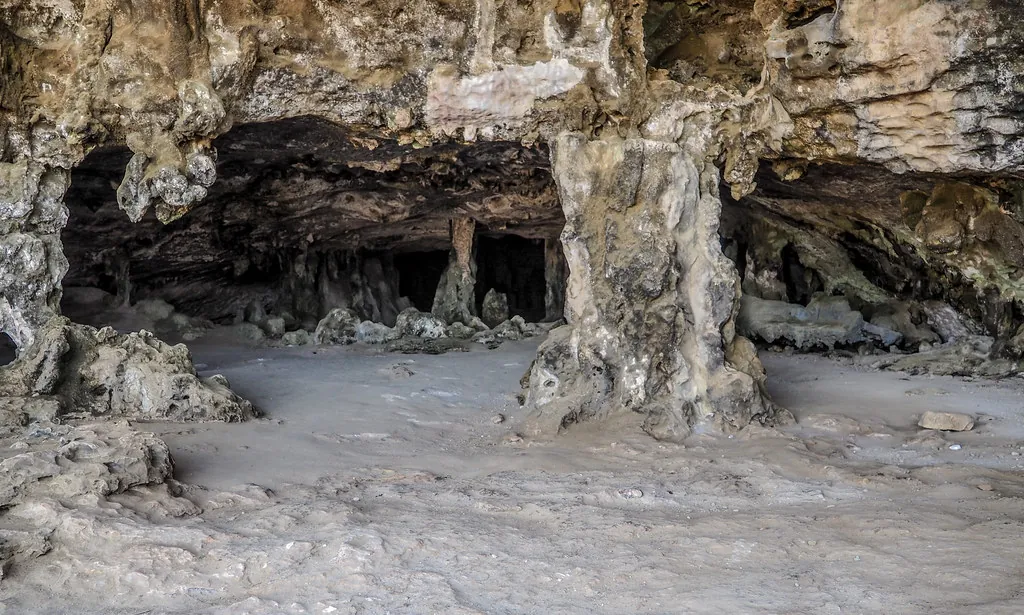
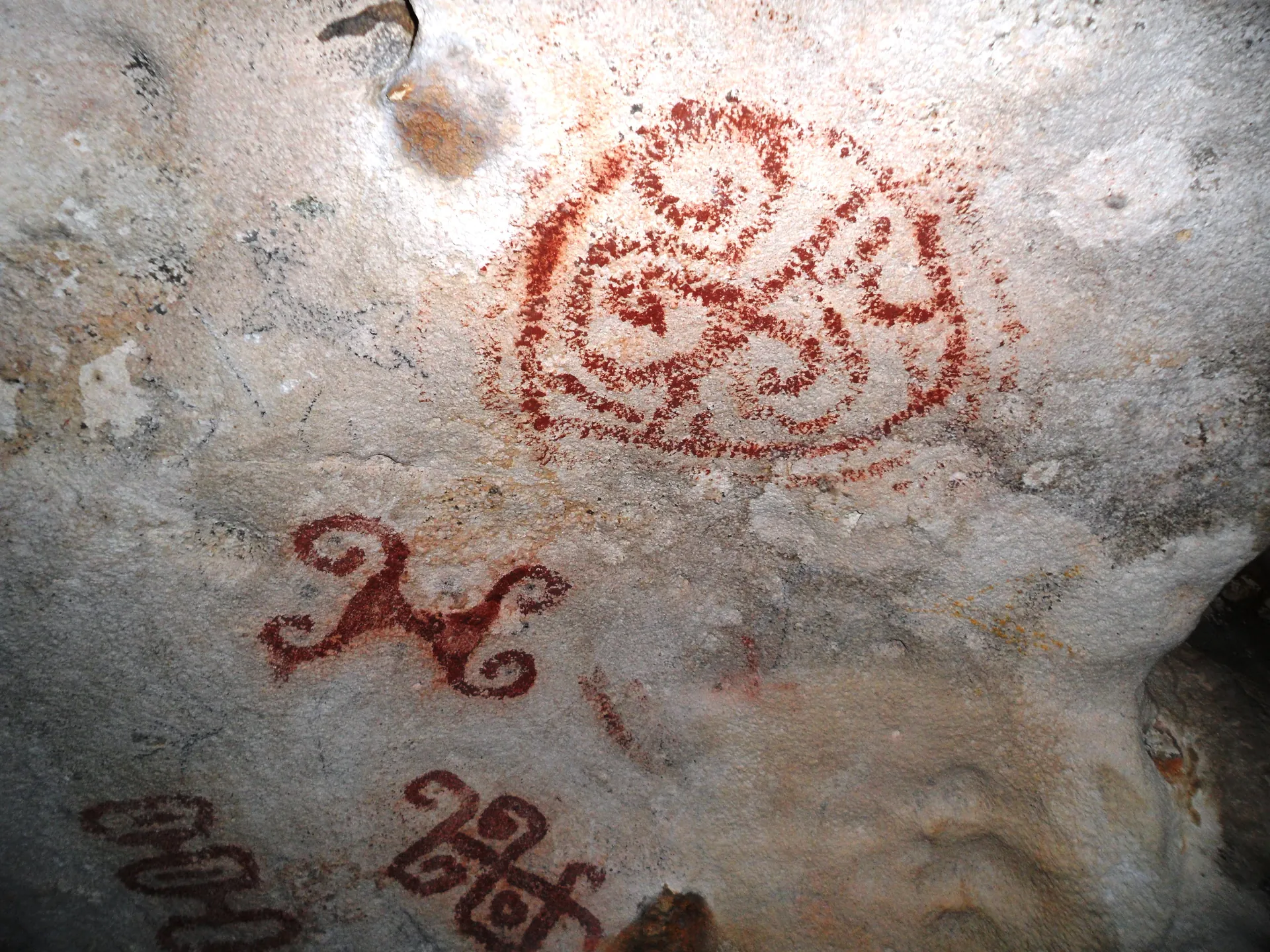
The cavern itself is modest. You walk in through a broad, dry mouth, and you are immediately, unmistakably inside a cave — cool, slightly damp, and lit by a soft shaft of daylight from the opening. The ceiling is low in places. There’s a faint whiff of damp mineral and old dust. And on the walls, in a reddish-brown pigment that has no business surviving four centuries of Caribbean humidity, are the Arawak drawings. That’s the point of Fontein Cave.
If you have come for stalactites the size of cathedral pillars, you will be mildly disappointed. If you have come to stand in a dim room and look at a spiral drawn by someone who died before Europeans ever set eyes on this island — you will find it properly haunting. Size is not the measure of a place. Fontein Cave carries more genuine cultural weight than any other cave in Aruba, and it earns that reputation quietly.
Opening Hours, Last Entry & Best Time to Go
Arikok National Park opens daily at 08:00 and closes at 16:00 (last vehicle entry around 15:00). Fontein Cave follows the same rhythm; a ranger is usually on-site across the middle of the day. But the clever window is narrower than the park’s own hours.
Park Opens
08:00 daily, including Sundays and public holidays. San Fuego is the main gate for Fontein; Vader Piet on the north side is often closed to private traffic.
Last Practical Entry
15:00 at the gate. Aim to be inside Fontein by 14:30 at the absolute latest — the ranger packs up, and the light goes flat.
The Tour-Bus Clock
Organised groups cluster between 09:45 and 11:30, then again at 13:30–14:45. You’ll hear them before you see them.
Best Window
The first 90 minutes after opening. Cool air, soft light, and often the cave entirely to yourself for ten minutes at a stretch.
Midday heat here is a genuine hazard, not a travel-blog footnote. The walk from the car park to the cave mouth is short, but the sun bouncing off the coral-limestone is brutal — 32°C feeling closer to 38°C when the wind drops. If you arrive between 12:00 and 14:00, carry twice the water you think you need, and don’t try to “do” Quadirikiri afterwards if you’re already wilting.
Tickets & Prices — €, $ and Afl.
Aruba pegs the florin (Afl.) to the US dollar at roughly Afl. 1.79 = $1.00, and most park-side signage quotes in dollars. Online operators quote in euros. Here’s the reconciliation so you’re not surprised at the gate.
| Item | USD | EUR | Afl. |
|---|---|---|---|
| Arikok adult entry (includes Fontein Cave) | $22.00 | ~€19.60 | Afl. 39.00 |
| Arikok child entry (under 12) | $12.00 | ~€10.70 | Afl. 21.50 |
| Ranger-guided cave talk (on-site, cash tip welcomed) | Included | Included | Included |
| Half-day Arikok jeep safari (bundled) | from $78.00 | ~€70.00 | Afl. 140.00 |
| Private Arikok jeep tour (up to 4 guests) | from $299.00 | ~€269.00 | Afl. 535.00 |
There is no separate cave ticket for Fontein. If anyone at the roadside tries to sell you a “Fontein Cave entry” off-site, it’s a tout — walk on. The full breakdown of what a bundled tour actually covers (transfers, water, park entry, guide gratuity) is on the Tickets & Tours page, and the park-fee detail lives on Arikok National Park Fees & Entry Tips.
Getting There & Park Orientation
Self-drive is the honest answer for anyone wanting freedom, but only if you’re comfortable on unpaved roads and unbothered by the absence of road signs. From Oranjestad it’s roughly 25 minutes to the San Fuego gate; from the high-rise hotels in Noord, closer to 40 with traffic. The interior tracks are graded but rutted, and a compact hire car will bottom out. A small 4×4 is not a flex here — it’s a practicality.
Taxis will take you to San Fuego but won’t follow you into the park; you’ll pay to sit in a car park. Organised tours handle the whole thing, which is why so many visitors book them. And one warning: GPS alone is unreliable in the interior. Use offline maps, follow the painted stone markers, and trust your own eyes over the little blue dot. The full logistics — park entrances, road conditions, hotel-by-hotel drive times — sit on How to get to Fontein Cave, and orientation notes are on the Map & Location page.
The Arawak Drawings: What You’ll See Inside
Reddish-brown figures. A long, looping spiral. Something that reads like a face, or a bird, or perhaps neither. The petroglyphs are attributed to the Caquetío — the Arawak-speaking people who lived on Aruba long before the Spanish arrived, and whose descendants still live on the island today.
The pigment has survived in part because the cave is dry, sheltered and cool, and in part because successive generations have been careful. It is astonishingly fragile. Humidity from human breath alone can degrade the surfaces over years. Stand close enough to see the lines, not close enough to feel your own exhale bounce back.
I’ve spent many afternoons sketching these figures and I still can’t tell you exactly what they mean. That’s the correct reaction. Anyone who claims certainty is selling something. For symbolism, archaeology and timeline, I’ve laid everything out on Fontein Cave History & Arawak Drawings — it deserves the space far more than this summary does.
Cave Geology & Formations
Fontein is a limestone cave — a solution cavity carved by slightly acidic rainwater working through ancient coral reef over tens of thousands of years. That origin story matters, because it explains the shapes you’re looking at. The stalactites hanging from the ceiling drip slow and irregular, closer to melted candles in a cold old cathedral than to the thick pillars you see in the tourist brochures. The stalagmites rising to meet them are slower still — a centimetre a century, at best.
But the detail that quietly steals the show is the tree roots: pale, threadlike filaments that punch through the ceiling and dangle into the void, looking for all the world like something pulled out of a Victorian curiosity cabinet. They thread down through the limestone and sometimes curl near the petroglyphs — root, rock and pigment sharing one small dark room.
If you want to shoot it, the Photos & Geological Formations page covers low-light technique, no-flash ethics and the best interior angles. Bring a headtorch regardless. The ranger’s light is bright but narrow.
Guided vs Self-Guided: What the Ranger Actually Adds
Here’s the honest bit. Walk in blind and you will miss half the drawings. They are small, they sit high on the wall, and they are the same colour as the rock unless the light hits them right. Without someone pointing them out, you’ll see the spiral and assume that’s all there is, and you’ll leave in eight minutes wondering what the fuss was about.
The on-site ranger talk isn’t academic — it’s warm, brief and often funny — but it transforms the visit from “hole in a rock” to “cave.” It’s also free with your park entry. If you’re already paying €20 to get in, there is no good argument for skipping the five minutes of context that make the €20 worth it.
Top Arikok Points of Interest — Compared
Which of the six is worth your afternoon — and which you can skip without guilt.
Fontein Cave
Aruba’s petroglyph cave. Short walk from the car park, small interior, Arawak drawings and stalactites. Best first thing in the morning.
Read History Guide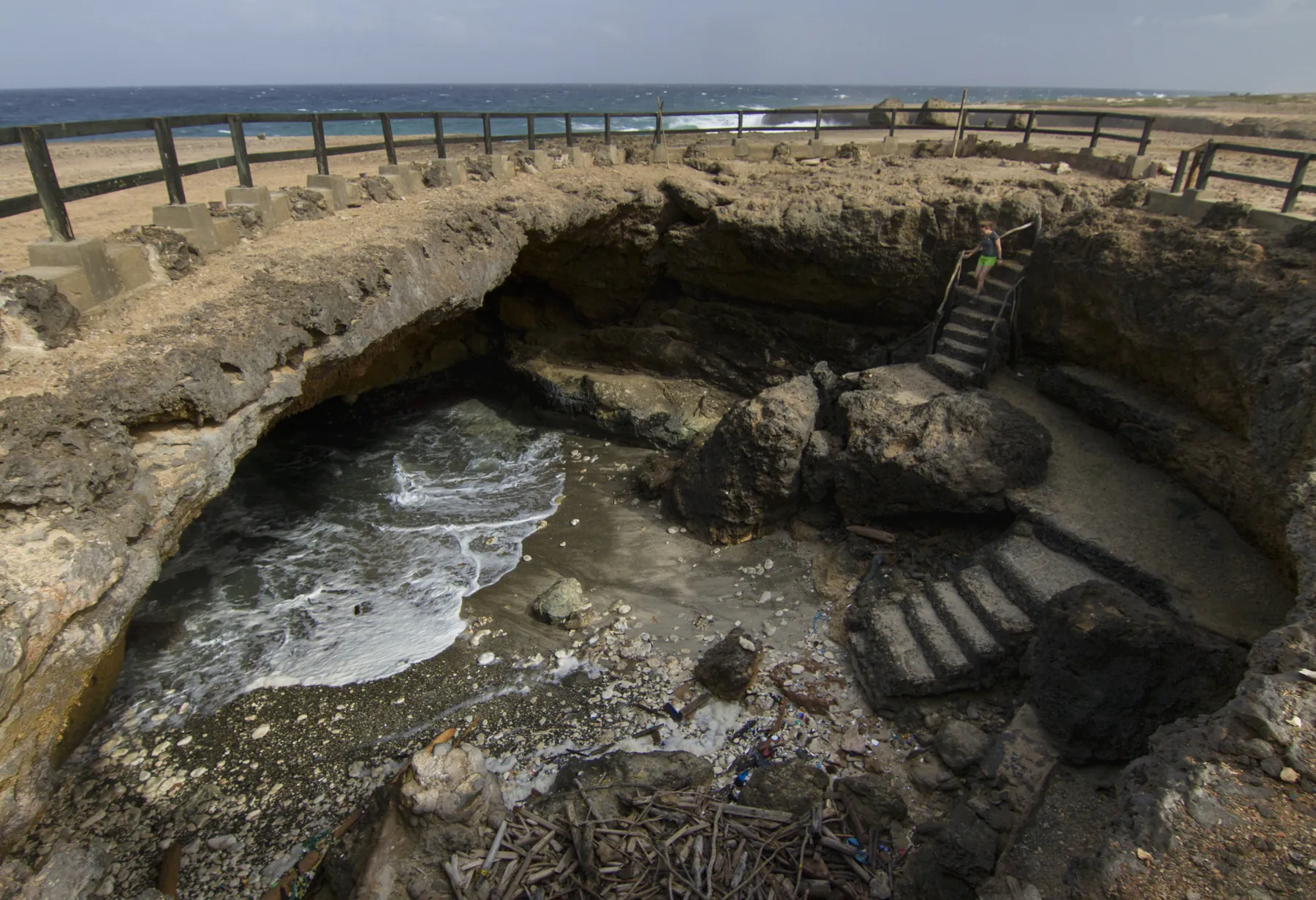
Quadirikiri / Gadirikiri Cave
The famous skylight cave — bright, airy, and genuinely photogenic. Spelling duplicates in guides (Quadirikiri vs Gadirikiri) refer to the same place. More impressive visually than Fontein, less culturally loaded.
Read Cave Comparison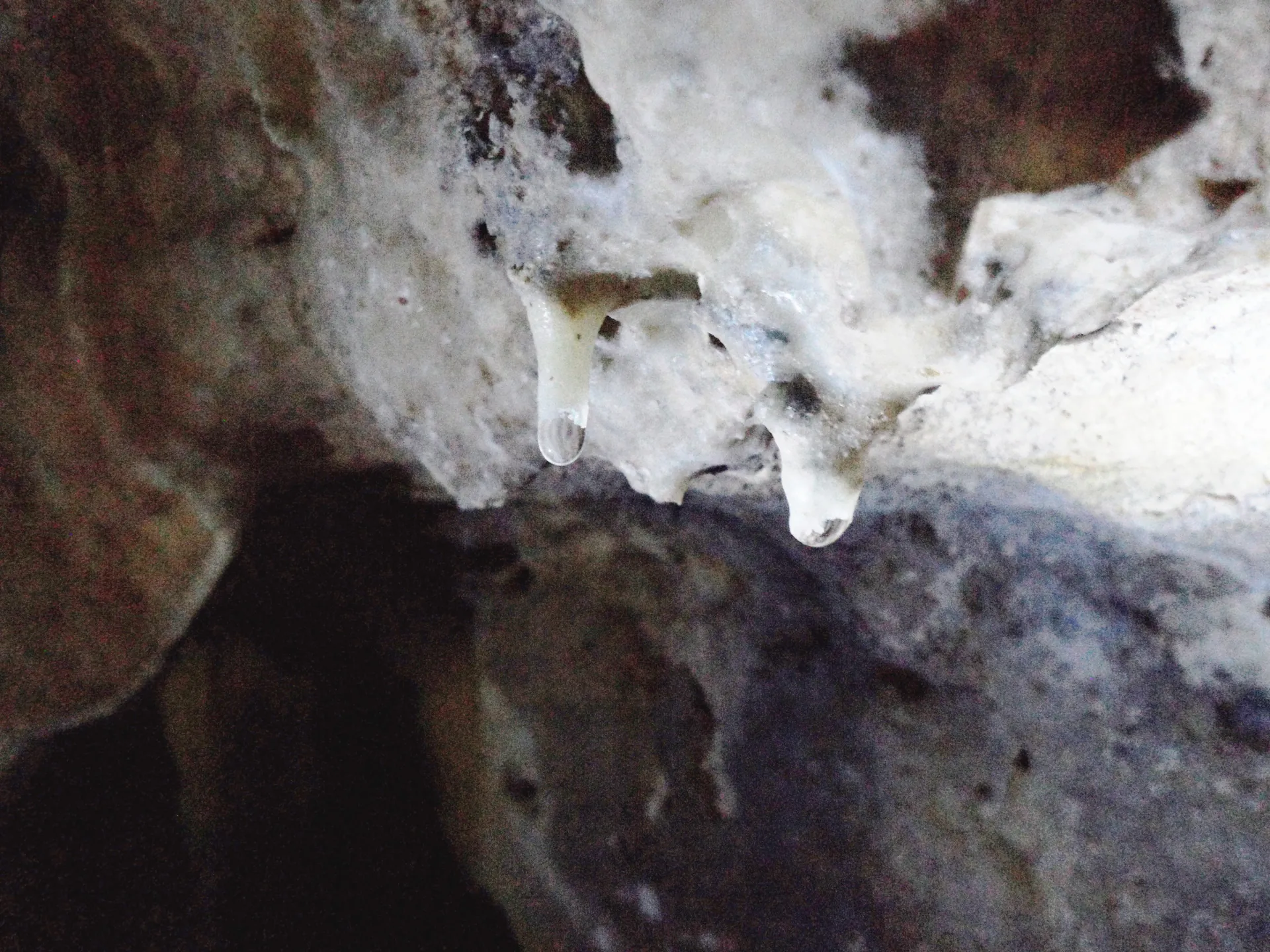
Huliba / Baranca Sunu / Tunnel of Love
One cave, three names. Requires a ranger escort. You will crawl, crouch and swelter. Bats present — that’s the point for some people, the immediate no for others.
Read Cave Comparison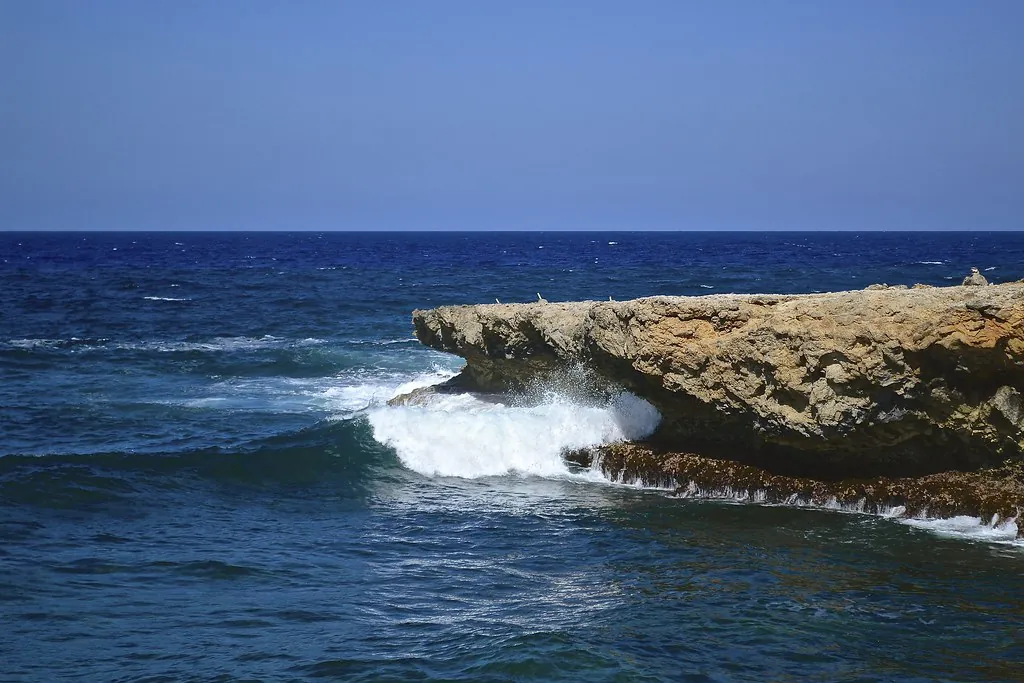
Conchi — the Natural Pool
The famous north-coast swim spot. Separate attraction entirely from Fontein. Access and open status can change without notice — check before committing a day to it.
Read Pool Status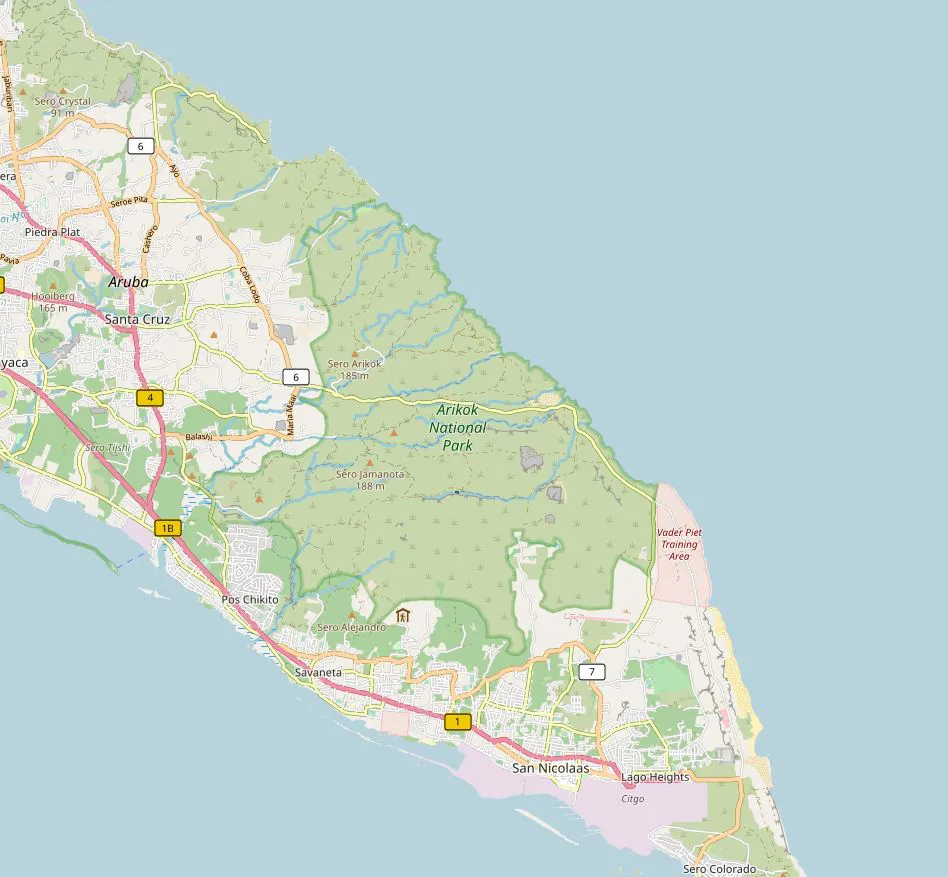
San Fuego Visitor Center
Main park entrance, café, restrooms, ranger desk and orientation exhibits. Start here for a park map before you drive to the interior sites.
Read Park GuideArikok Desert Interior
Divi-divi trees, volcanic rock, wind turbines on the horizon. The drive between sites is half the pleasure — but only in a suitable vehicle and never in the midday glare.
Read Map & LocationPlan Your Visit by Activity
Three clusters. Pick the one that matches your energy and your hire car.
Cultural Cave Circuit
Fontein Cave plus the Arawak context — a half-day heritage focus pairing the cave with the San Fuego exhibits and the Quadirikiri drawings. Best for readers who came for rock art, not sunbathing.
Explore Cultural Circuit4×4 Arikok Adventure
Jeep or UTV route that bundles Fontein, Quadirikiri, the Natural Pool and a Baby Beach finish. Long day, uneven roads, brilliant if you don’t want to drive them yourself.
See Jeep OptionsPhotography & Formation Focus
Low-light interiors, no-flash ethics and the specifics of shooting limestone and root threads without degrading the surfaces. Ideal for phone-photographers and tripod nerds alike.
Read Photo GuideThings to Avoid in Fontein Cave: Tourist Traps & Red Flags
Proving editorial independence through unbiased criticism. These common tourist traps, booking mistakes and safety hazards ruin visits when unplanned.
The “Swimmable Cave Pool” Myth
Fontein Cave has no swimmable pool. Full stop. Outdated blogs (many dated 2018–2021) still describe an underground swim at Fontein, conflating it with the separate cave-pool attraction at Conchi. Anyone selling you a “Fontein swim” tour is either confused or dishonest. Verify current status at Cave Pool Closure: Status & Alternatives before paying a deposit.
Roadside Ticket Touts & Unlicensed “Guides”
Around San Fuego and the Noord strip, unofficial “guides” occasionally wave tourists down and offer a shortcut into the park. There is no shortcut. There is no off-site Fontein ticket. Buy your entry at the San Fuego gate, or book through a licensed operator with a registered fleet. Anything else is a gamble you don’t need.
Arriving at 12:30 and Queueing in Full Sun
Non-refundable on-site tickets combined with the peak crowd window (mid-morning and early afternoon) means you can pay full price to stand in the sun for 20 minutes while three jeep groups rotate through a cave that fits twenty people. Arrive before 09:30 or after 15:00, and don’t book a fixed slot you can’t cancel if the schedule shifts.
Unmetered Taxis & Unclear Return Trips
Some taxis will agree to drop you at San Fuego with no upfront price and no confirmed pick-up time — because the driver knows there is no ride back from the interior. Agree the fare and the return time in writing (or via a screenshot) before you get in. Or book a tour with transfers included and skip the negotiation entirely.
Tourist-Trap Dining at the Gate
The nearest food is either the simple café at San Fuego or wherever your tour finishes. Excursions that “include lunch” frequently stop at a mediocre buffet priced for captive cruise traffic. Eat before you enter, pack proper snacks, and save the sit-down meal for Oranjestad or Palm Beach afterwards.
Visitor Logistics: What to Wear, Bring and Expect
Fontein is not a physically demanding cave — no ladders, no scrambling, no helmets required. But it is in an arid park with unpredictable footing and very little shade between your car and the cave mouth.
Wear
Sturdy closed shoes — the approach path is uneven and often dusty. A light long-sleeve layer protects against sun and brush. Skip sandals entirely.
Bring
At least 1.5 litres of water per person, a hat, high-factor sun cream, cash for entry and ranger tips, and a headtorch if you have one. Binoculars welcome.
Expect
Warm, humid air inside the cave. Low ceilings in places. Bats roosting in the far reaches. Insects, especially after rain. Uneven footing near the drawings.
Accessibility
There are steps at the cave mouth and the interior floor is uneven. Not wheelchair-suitable. Visitors with limited mobility should ask a ranger about the flatter viewing angle at the entrance threshold.
Full etiquette and safety specifics — including the exact wording on touching the drawings — are on the Visitor Rules & Guidelines page.
Responsible-Visit Rules — the Short Version
No touching the drawings. Ever. Not with a finger, not with a sleeve, not “just to check.” Human skin oil is a slow vandal. Flash photography past the threshold is prohibited where posted — the light degrades pigment. Stay on marked paths; the limestone around the drawings crumbles. Do not collect “souvenirs” of any kind. Do not remove, move or lean on rocks. And if the ranger asks you to step back, step back without debate — they are there to protect the cave, not to police your selfie.
Where Fontein Cave Sits on the Island
Roughly 12.4925° N, 69.9139° W — deep inside Arikok National Park, on the north coast, reachable by the San Fuego gate. Below is the spatial overview; GPS coordinates, walk distance from parking, and landmark orientation are detailed on the Map & Location page.
Fontein Cave — Frequently Asked Questions
Why is the cave pool in Aruba closed — and is it the same as Fontein Cave?
How much does it cost to enter Arikok National Park and Fontein Cave?
What are the best caves to visit in Aruba beyond Fontein?
Should I book a Fontein Cave tour in advance or buy on-site?
How do I get to Fontein Cave inside Arikok?
Is Fontein Cave worth visiting if I only have half a day?
What should I not do at Fontein Cave?
Further Reading & Authority Sources
For fact-checking and deeper context, jump to the following external references — all of which I use myself when updating this guide:
- Arikok National Park (official) — opening hours, park fees and closure notices direct from the management authority.
- Aruba Tourism Authority (aruba.com) — island-wide heritage context and event calendars.
- National Archaeological Museum Aruba (MANA) — repository of Arawak and Caquetío archaeological scholarship.
- UNESCO Memory of the World regional resources — for context on Indigenous Caribbean rock art preservation.
- Smithsonian Caribbean Indigenous Legacies Project — peer-reviewed background on Arawak-speaking peoples of the southern Caribbean.
Internal cross-links worth bookmarking: history & drawings, photography, visitor rules, map & location, FAQ, park overview, cave comparison, and park fees deep dive.