Hidden Gems in Aruba: Beyond the Beaches
Hidden Gems in Aruba: Beyond the Beaches
By the fourth morning of a Palm Beach holiday, the sun lounger starts to feel like a waiting room. That is not a complaint about Aruba’s beaches, which earn every bit of their reputation, only an observation that the island keeps its most interesting hours inland. Aruba off the beaten path begins within a forty-minute drive of the high-rise strip: 32 km² of protected desert inside Arikok National Park, a German freighter resting in eighteen metres of water off the Malmok coast, a street-art quarter in San Nicolas that tour buses rarely bother with, and a cave where people were drawing on limestone long before anyone thought to build a hotel.
I moved here from Bristol eight years ago and now lead small heritage walks through the park, which means I spend most of my working life watching visitors discover that Aruba’s interior is nothing like the postcard they packed for. The plan below builds one proper day, four completely different landscapes, and enough slack for a late lunch.
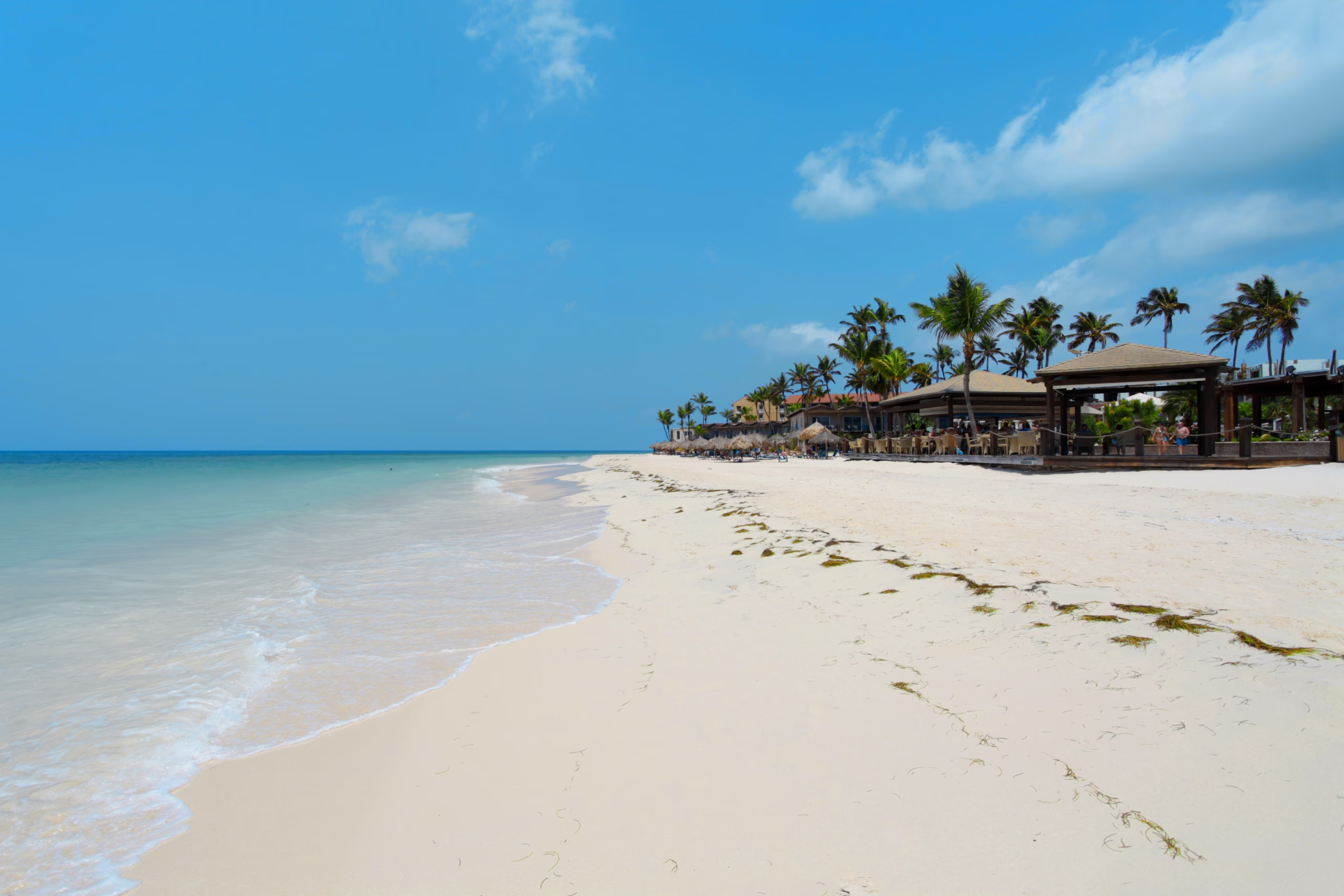
How the Island’s Hidden Gems Cluster
Build a route rather than a wishlist. Aruba is only 30 km long, but the roads inland twist around dry riverbeds and volcanic boulders, so a badly ordered itinerary turns into five hours of driving with ten minutes at each stop. Group your day by geography and everything fits.
- Arikok interior and north coast: Fontein Cave, Quadirikiri, Huliba, the gold mill ruins, the Donkey Sanctuary and the wind-blasted dunes at Boca Prins all sit inside or beside the park boundary.
- San Nicolas and the southeast coast: the mural district, Baby Beach, Rodgers Beach and the Antilla wreck, all within fifteen minutes of each other at the island’s flat southern tip.
- Noord and Palm Beach peripherals: the Butterfly Farm, theCalifornia Dunes, and the quieter snorkel coves at Malmok and Arashi.
- Oranjestad city: the colonial waterfront, the archaeological museum, and the food stalls around the bus terminal.
One thing to internalise before you set an alarm: Aruba’s east coast faces the sunrise, not the sunset. The light on the north shore is gone by mid-afternoon, and the Atlantic swell on that side is too rough for swimming almost everywhere. Plan your coastal stops early and save the sunset for the leeward beaches you already know.
Top Nearby Spots at a Glance
| Spot | Where | Why it earns the detour | Best time |
|---|---|---|---|
| Fontein Cave | Arikok, near Santa Cruz | Arawak petroglyphs, a still freshwater pool, candle-wax limestone | 07:30 to 09:30 |
| Quadirikiri Cave | Arikok interior | Two ceiling openings with shifting light shafts, resident bats | 09:00 to 11:00 |
| Huliba and Tunnel of Love | Arikok interior | A stoop-and-shuffle crawl that no coach tour attempts | Morning, with a ranger |
| Bushiribana Gold Mill Ruins | North coast | 1824 gold rush masonry melting into the sea spray | Before 10:00 |
| Aruba Donkey Sanctuary | On the road into Arikok | Rescued animals, honest conservation work, small entry fee | 09:00 to 12:00 |
| San Nicolas murals | South-east | Aruba’s open-air gallery, plus the best roti on the island | Late afternoon |
| SS Antilla wreck | Malmok, offshore | A 400-foot freighter in shallow water, visible from the surface | Calm mornings |
| Mangel Halto | South-west coast | Mangrove channels and shallow reef, no vendors, no music | Early or late |
| Ayo and Casibari | Near Paradera | Monolith boulders with steps cut between them, free entry | Sunrise or dusk |
Highlights Around the Region
Interior and North Coast
This is the Aruba that requires a vehicle with real clearance. The park’s dirt roads are graded but corrugated, and the rental companies will politely remind you that their insurance does not cover the ones without tarmac. Go early, carry four litres of water per person, and expect no shade anywhere.
San Nicolas and the South
Flat, paved and pleasantly empty. The murals spread across a dozen blocks near the community museum, and the town keeps its own pace: slower, friendlier, and far better value for lunch than Palm Beach. Pair it with Baby Beach and the Antilla for a full afternoon.
Inside Arikok: The Cave Set
The park is the spine of any deeper Aruba itinerary, and three significant caves sit within a few minutes’ drive of one another along the same limestone belt. Each demands something different from you. Fontein wants cultural attention. Quadirikiri wants a camera and patience with low light. Huliba wants nerve and a willingness to fold yourself into a space the size of a dishwasher.
Park entry costs roughly €10 / ~$11 per adult and covers the visitor centre, the trails and cave access, so there is no separate ticket for Fontein itself. Fees and opening hours shift with the season, and the official Arikok National Park website is the only place worth trusting for current numbers. If you would rather someone else handled the driving, several operators run the north coast and caves as a single loop, including this 4-hour Arikok jeep safari.
Fontein Cave as the Cultural Anchor
Fontein is the one cave on the island where human marks outlast the geology. Two chambers, a freshwater pool that collects drips from the roof, and a set of Arawak petroglyphs painted in dark pigment on limestone that reads like melted candle wax in an old cathedral. The drawings are properly haunting once your eyes adjust, which takes longer than most visitors allow. Stand still for two minutes before you take a single photograph.
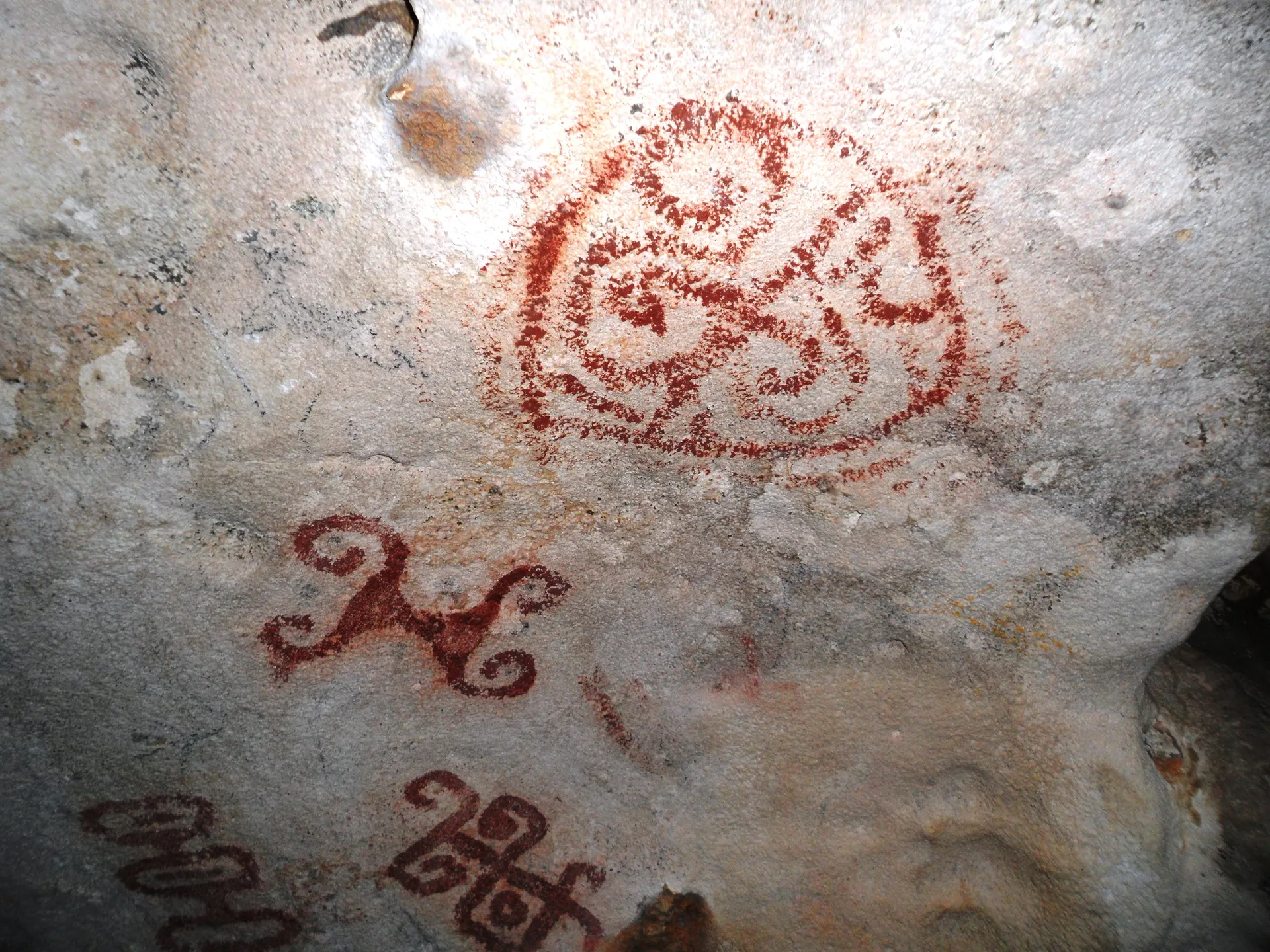
The symbols themselves, spirals, faces and what look like animal forms, carry meanings that archaeologists still argue about, and I have written about the interpretations on the history and Arawak drawings page. For camera settings, angles and the no-flash rule, the photography guide has the technical detail. What matters on site is simple: hands off the rock, no flash where the signage forbids it, and stay on the marked floor even when a better angle tempts you forward.
Skin oil is the quiet killer of rock art. A single fingertip leaves a residue that holds dust, feeds bacteria and dulls the pigment, so what looks like a harmless touch is a slow erasure of something 3,000 years old.
Timing matters more here than anywhere else in the park. The tour buses roll in between 10:30 and 14:00, and the cave fills with forty people wearing sandals and complaining about the heat. Arrive by 08:00. You will share the first chamber with bats and a ranger, and the light through the entrance will be doing something lovely. Details on parking, walking distance and the two park entrances live on the map and location page.
Aruba’s caves are not sideshows to the beaches. They are the island’s memory, and Fontein holds the oldest handwriting in it.
The Cave You Crawl Through: Huliba and the Tunnel of Love
Huliba, also called the Tunnel of Love, is the counterweight to Fontein: no paintings, no pool, no interpretive signage, just a narrow passage that asks you to stoop, shuffle and trust the person in front. Access is ranger-led, partly because the route is genuinely tight and partly because the resident bat colony does not need a hundred strangers a day. Nobody with claustrophobia, a bad back or a taste for clean trousers should attempt it.
Coach tours skip Huliba because the entrance cannot handle the traffic and the walking pace is too slow to fit a schedule. That is precisely why I send confident hikers there. Ask at the visitor centre about the current ranger arrangement rather than assuming it runs daily, and check the Arikok park status page before you build a morning around it.
Quadirikiri and the Bat Question
Quadirikiri, spelled Guadirikiri in older guidebooks and Quadriri on some road signs, has two chambers and two collapsed roof openings that pour light down the walls. The naming confusion is real, and it catches out even local taxi drivers, so say the word slowly and point at a map. Same cave, three spellings, no drama.
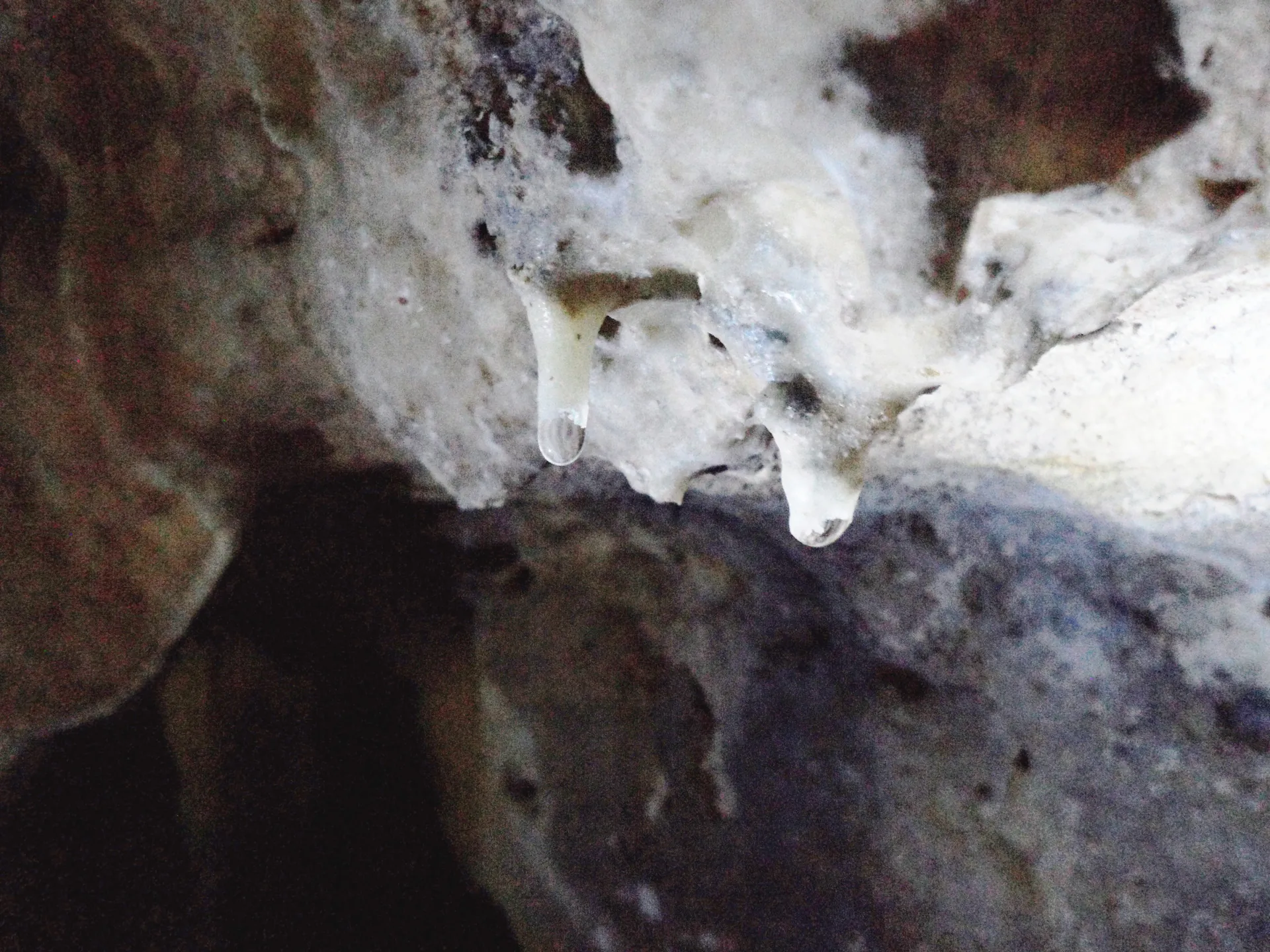
The colony of insect-eating bats hangs in the darker reaches, and they are far more interested in moths than in you. Keep your voice down, keep torches pointed at the floor, and never wave a light at the roost. The best hour is mid-morning, when the sun shafts are steep enough to photograph and the ground is still cool underfoot.
Desert Trails, Monoliths and Stone Formations
The island’s geology does not stop at the cave entrances. Ayo and Casibari, two clusters of diorite boulders near Paradera, have steps cut between them and entry costs nothing, which makes them the cheapest viewpoint on Aruba. Jamanota, the island’s highest point at 188 metres, is a short drive and a very long view. Farther north, Boca Prins and Dos Playa give you wind-blasted dunes and two beaches where the Atlantic arrives with intent.
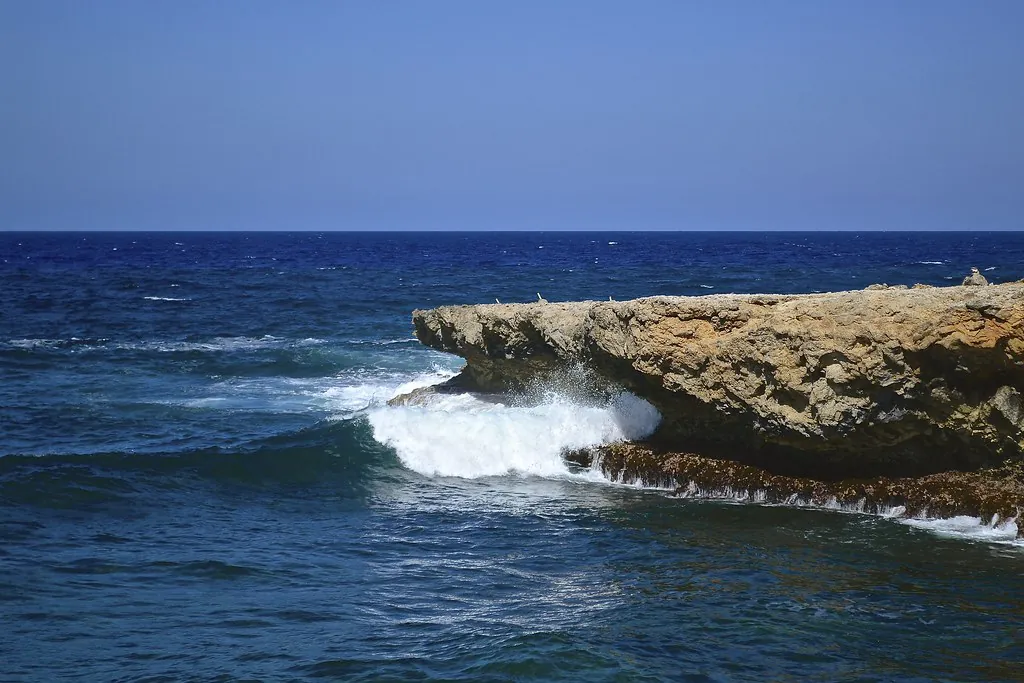
Midday heat out here is a bit of a faff, honestly, and I say that as someone who works in it. The ranger trails have no shade, the trade winds disguise how fast you are dehydrating, and the cactus spines will find any exposed ankle. Start before eight, finish by eleven, and treat the afternoon as a swim-and-sieste slot. Sturdy closed shoes are not optional; the limestone underfoot is sharp enough to slice a flip-flop in half. The visitor rules page covers footwear, water and wildlife etiquette in more detail.
Abandoned Aruba: Gold Mills and Plantation Ruins
Aruba had a gold rush, and it left two sets of ruins worth your time. Bushiribana, on the north coast road, is the photogenic one: stone arches, broken walls and the sea hammering the rocks below. Balashi, inland near the Spanish Lagoon, is quieter and more complete, with the old smelting works still legible in the masonry. Gold was found here in 1824, and the industry had collapsed by the early twentieth century once the yields ran dry and the machinery proved too costly to keep alive.
Climb nothing. The mortar is soft, the edges crumble, and the park authority has every right to fine people who treat a nineteenth-century wall like a climbing frame. Look, photograph, walk the perimeter, move on.
Donkey Sanctuary Aruba
The Donkey Sanctuary sits on the road into Arikok, which makes it a natural half-hour stop on the way to Fontein. It exists because donkeys were released when the island’s freight industry modernised, and the roadside animals you see chewing on cactus are the descendants of working stock that nobody wanted. Feeding them from your car is the single worst thing a visitor can do here: it teaches them to stand in traffic and it wrecks their digestion.
Entry is a few dollars, opening hours run roughly from mid-morning to early afternoon, and the Aruba Donkey Sanctuary publishes current times on its own site. Budget an hour if you have children in the car. Budget twenty minutes if you do not.
Butterfly Farm, Palm Beach
Not an Arikok day. The Butterfly Farm belongs to a Palm Beach afternoon, when the sun has turned aggressive and the children need somewhere cool with moving things to look at. Tickets usually allow re-entry across your stay, so you can return on a second morning rather than racing through. Butterflies are most active in the first hours after opening, and the enclosure at midday is a sauna with wings.
Check timings and the re-entry policy directly with The Butterfly Farm before you go, since these details change with the season.
San Nicolas Street Art District
San Nicolas turned its own walls into an attraction. Murals climb three storeys along the main streets, painted by visiting artists during the annual art fair, and the community museum nearby explains who the town’s people actually are: refinery workers, sailors, migrants from sixty countries, and a population that kept the island’s economy alive when tourism was still a rumour. The food here beats the hotel strip on price and flavour, and the pace is entirely its own.
It is a twenty-five minute drive from Oranjestad with no beach at the end of it, which is exactly why so many visitors never come. Pair the murals with Baby Beach and a plate of roti, and the afternoon looks after itself.
The Antilla Shipwreck
The SS Antilla is a 400-foot German freighter, scuttled by her own crew in 1940 rather than surrender to the Dutch, and she now lies in about eighteen metres of water off Malmok. Snorkellers see the superstructure from the surface on a clear day; divers get the full length of her, half-buried in sand and furred with coral. Seas are calmest before eleven in the morning, and an afternoon chop turns the site into hard work.
Choose an operator with a small passenger limit and a proper briefing, or look for a combined sail and snorkel that includes the wreck as one of two stops, such as this Dolphin catamaran snorkel sail. If you are comparing options across the island, the tours and tickets page lays them out side by side.
Quiet Coastlines and Water
The leeward beaches get the crowds and the windward coves get the character. Mangel Halto has mangrove channels and a shallow reef that suits nervous swimmers, reached by a boardwalk beside the road. Rodgers Beach and Bachelor’s Beach sit quietly next to the refinery at the island’s southern tip, and both are calm and almost empty on weekdays. Daimari, on the north coast, is beautiful and genuinely dangerous, with a steep shore break and a strong undertow.
The Blue Room, a sea cave near Seroe Colorado, is reachable only by boat or a strong swim, and it should only be attempted with an operator who knows the swell. And the Natural Pool at Conchi has spent years opening and closing on the park authority’s judgement; treat it as view-only unless you have confirmed otherwise that morning. The bigger cave pool inside Arikok has been closed since 2019 for safety reasons, a subject I cover in full on the cave pool closure page.
Rip currents on the north and east coasts kill experienced swimmers, not just tourists. If the water is churning white between you and the horizon, that is not a challenge, it is a warning.
Getting Around
A small 4×4 or a high-clearance SUV is the honest answer for the park, though a standard car handles the paved loop and the main cave car park without complaint. Leave the low-slung hire car at the hotel if your day includes Boca Prins or the north coast dunes. Fuel up in Santa Cruz or Oranjestad before you enter, because there is nothing inside the boundary but cactus and wind.
Mobile signal drops in parts of the interior, so download an offline map before you leave. Drive times are short but deceptive: twenty minutes can mean eight kilometres of washboard track. If you are arriving by cruise ship, the park is roughly thirty-five minutes from the Oranjestad terminal, which is comfortable for a morning cave visit and tight for a full island loop.
Full driving directions, taxi costs and GPS notes are on the transport page, and the wider park fees picture sits on the Arikok entry budget guide.
Responsible Travel Reminders
- Never touch the petroglyphs, the stalactites or the cave walls. Skin oil and dust do permanent damage.
- No flash photography where signage prohibits it, and no drone flights inside the park without written permission.
- Stay on marked paths. The desert crust you crush underfoot takes decades to recover, and the caves have unprotected drops.
- Carry at least two litres of water per person and drink it before you feel thirsty.
- Take every piece of rubbish out with you, including fruit peel and cigarette ends.
- Keep a respectful distance from donkeys, iguanas, goats and nesting turtles, particularly on Eagle Beach between March and September.
- Book guided cave access where the park requires it, and pay the entry fee rather than looking for a way around it.
Aruba’s protected spaces are small and heavily used, and the island’s official tourism authority runs seasonal campaigns on exactly this point. A little restraint from each visitor is what keeps Fontein’s drawings legible for the next generation of curious people with headtorches.
One day, four landscapes, and a set of three-thousand-year-old marks on a cave wall that no beach photograph will ever match. Start at Fontein before the buses, work your way north, and finish with something cold in San Nicolas.