Arikok National Park Fees & Entry Tips
What Arikok Costs in 2026: The Short Answer
Arikok National Park charges one entry fee per person, paid once at the gate, and that single payment carries you into Fontein Cave, Quadirikiri Cave, Boca Prins, the walking trails and the Visitor Center. There is no separate cave ticket, no cave surcharge, and no second booth tucked away behind the aloe scrub. You pay, you get a wristband or a windscreen sticker, and the whole park is yours until closing time.
- Adults: Afl. 20 / US$11 (roughly £8.50 or €10) for a full day inside the park boundary.
- Children aged 5 to 12: Afl. 10 / US$6, and under-fives walk in free with a paying adult.
- Opening hours: Daily 08:00 to 16:00, last admission at 15:00, and the guide station inside Fontein closes earlier than the main gate does.
I have watched plenty of visitors arrive at San Fuego with the wrong number in their head, usually because an old blog post from 2014 told them the park was free, or a cruise review mentioned a “cave entrance fee” that never existed. Prices are set by the park authority and reviewed from time to time, so treat the figures below as the honest 2026 picture and check the Aruba Tourism Authority site before you set off.
The 2026 Arikok Fee Table
One table, five columns, no small print games. The florin figure is the one the booth will quote you, the dollar figure is what you will hand over if you pay in USD, and the euro column is a rough conversion for European travellers who want to budget before they fly.
| Visitor Category | Afl. | US$ | ≈ € | Not Included |
|---|---|---|---|---|
| Adult (13+) | 20.00 | 11.00 | €10.00 | Guided tours, jeep safaris, food and drink |
| Child (5 to 12) | 10.00 | 6.00 | €5.50 | Same as adult; no child discount on tours |
| Infant (under 5) | Free | Free | Free | Nothing, though you still need a car seat |
| Aruban resident (valid ID) | 10.00 | 6.00 | €5.50 | Resident rates apply at the gate only |
| Optional cave guide gratuity | 5.00 to 10.00 | 3.00 to 6.00 | €2.50 to €5.50 | Entirely your call, never compulsory |
The booth at San Fuego takes card and cash, and it takes both currencies. The Aruban florin is pegged to the US dollar at 1.79, a rate fixed by the Centrale Bank van Aruba, so you will not lose money either way. Change usually comes back in florins, which is fine because you will spend them on water before lunch anyway. If you are reading this because you searched “arikok national park cost” at 11pm the night before your visit, the number you need is 20 florins per adult, and it buys you an entire day.
What the Entry Fee Actually Covers (and What It Doesn’t)
Covered by One Ticket
- Fontein Cave, including the Arawak petroglyphs and the guide who points a torch at them
- Quadirikiri Cave and its two skylit chambers
- Every marked walking trail, from the short Boca Prins loop to the Jamanota ridge paths
- Visitor Center exhibits, the small museum room and the restrooms beside it
- The Boca Prins viewpoint and the dune boardwalk above it
- Parking at all official trailheads and cave car parks
Not Covered
- Guided tours and jeep or UTV safaris, which are sold by operators, not by the park
- Food, drink and the very average coffee at the visitor centre kiosk
- The tip for the guide stationed inside Fontein, which is genuinely optional
- Parking at commercial tour departure points in Oranjestad or Palm Beach
- Access to the Natural Pool by vehicle, since the coastal track demands a 4×4
- Anything at Arikok’s sister site at Sero Colorado beyond the shared gate fee
Read the full picture of what sits inside the boundary on our Arikok National Park and Cave Pool Status page, including how Fontein slots into a half-day versus a full-day route. The short version is that one ticket unlocks a genuinely large park, and the fee is the cheapest part of the day by a wide margin.
Does Fontein Cave Need Its Own Ticket?
No. Fontein Cave needs no separate ticket, no reservation and no pre-booking. The park entry fee you pay at San Fuego covers it completely, and the only money that changes hands at the cave mouth is a gratuity for the guide who works the interior, which most visitors hand over as a few florins on the way out. I have walked in behind people clutching printed “Fontein Cave entrance” vouchers bought from third-party resellers, and every one of them had paid twice for something the gate already included.
The guide at Fontein carries a headtorch and a memory full of Arawak (the Indigenous people of the Caribbean) stories about the drawings above your head. Ask him which figure is the shaman and which one is a bird, then tip five florins and watch his face change. Why do dated blogs still insist on a cave fee? Because before the park authority consolidated ticketing, small independent operators sold cave-only access at the roadside, and cruise reviews from that era still float around search results. The National Archaeological Museum Aruba, the body that documents the island’s rock art, treats Fontein as part of the protected Arikok estate, not as a standalone attraction with its own gate. If you want petroglyph context before you go, their records are the ones to trust. Full ticket mechanics, including what bundled tours hide in the headline price, sit on the tickets and tours page, and the quick-fire answers live on our Fontein Cave FAQ. The gate opens at 08:00 and the last car is admitted at 15:00. That hour of padding is not decorative: the drive from San Fuego to Fontein takes about fifteen minutes on gravel, and the guide station inside the cave shuts down before the main gate does. Plan backwards from the cave, not from the gate, and you will avoid the rather grim experience of arriving at 15:40 to find the barrier down and a ranger shrugging apologetically. If you are still on a trail at 16:00, a ranger will find you. It happens, and it is not a fine, but it is an awkward conversation in the heat. The gate closes at 16:00 sharp and staff do a sweep of the cave car parks before they lock up. Arikok has one paved artery running north to south, and everything interesting hangs off unpaved spurs. That distinction matters more than any other piece of planning on this page, because it decides whether your rental car is legal on the road you are about to drive. That last point deserves its own sentence. Most Aruban rental agreements void your cover the moment your tyres leave tarmac or graded gravel, and the park does issue fines for off-road driving in the protected dunes. Check the contract before you sign it, drop your tyre pressures slightly if the gravel is loose, and read our transport and access guide for the full breakdown of routes and car types. Everyone assumes the guided option is wildly more expensive. It usually is, but only by a margin that shrinks or flips depending on how many of you are in the car. A couple saves roughly forty to eighty dollars by driving themselves. A family of four swings the other way, because four park entries plus a day of car hire closes most of the gap, and the tour removes the navigation, the tyre-pressure anxiety and the argument about who is reading the map. Solo travellers nearly always come out ahead on a shared tour. Almost every Viator, GetYourGuide and Headout listing for Arikok folds the park fee into the advertised price, along with hotel pickup and a guide. When a listing says “park fees included”, it means the operator settles the gate on your behalf and you never touch the booth. That is the phrase to hunt for in the inclusions list before you pay, because a handful of cheaper listings omit it and leave you paying eleven dollars a head on top of an already pricey day. Self-drive visitors always pay the gate fee separately, which is why the comparison page at Fontein Cave tickets and tours shows an “includes entry” flag on every card. Read that flag before you compare prices, or you will be comparing apples to receipts. The single worst hour to reach the San Fuego booth is 10:30, when the island’s jeep convoys leave the hotel strip and hit the gate in a cluster. Queues at Fontein itself are shorter but real, because the cave mouth is narrow and one guide cannot talk twenty people through a low passage at once. By eleven the minibuses arrive in convoy, and Fontein’s entrance becomes a slow-moving queue of sunburnt people in matching lanyards. I do my own sketching at eight, when the only sound is dripping water and somebody’s sandal scuffing the limestone.
Weekdays in the low season (September through November) are the quietest stretch of the calendar, and Tuesday and Wednesday mornings are consistently kinder than Saturday.
Paying: Cash, Card and Buying Ahead
The booth accepts cash in florins and US dollars, and card payments go through without fuss. You can also buy ahead through the operator you booked with, which is the only realistic way to skip the entry lane entirely. The park authority page hosted on Aruba.com lists current rates and any seasonal adjustments, and it is worth a glance the week you travel.
Two Entrances, Two Very Different Drives
San Fuego sits on the northern side and is the right choice for Fontein, Quadirikiri and the Visitor Center. The second entrance at Sero Colorado serves the south-east corner and suits anyone coming up from San Nicolas, with quicker access to Boca Prins and Dos Playa. Choose your gate by which caves you want first, not by which one appears on your map app.
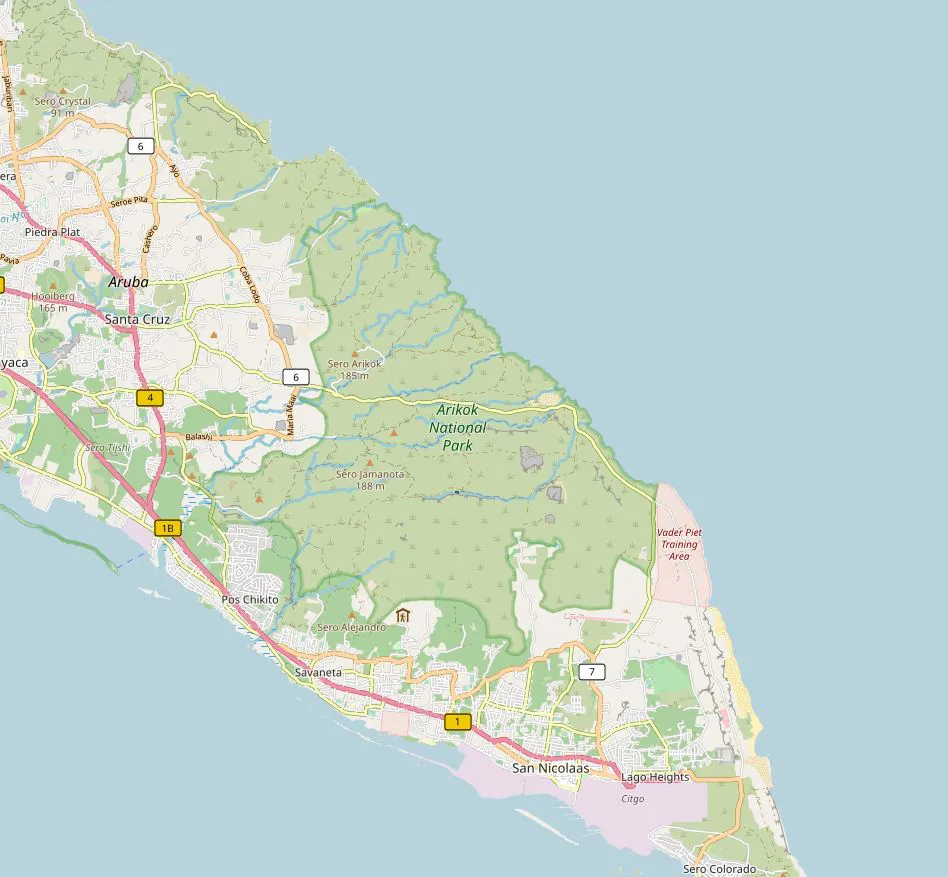
Our Fontein Cave map and location page has precise coordinates, signage notes and drive-time estimates from both gates.
Where the Money Goes, and Where It Doesn’t
Park fees fund ranger salaries, trail maintenance, the Visitor Center and the ongoing conservation work that keeps the petroglyphs stable. What they do not fund is anything sold at the roadside. If a man near the San Nicolas junction tells you he can walk you to a “secret cave pool”, he cannot, because the natural pool and cave pools have been closed to swimming for years on safety and ecological grounds. Our cave pool closure status post explains the full history, and the visitor rules page covers what happens if you ignore the rope barriers.
Budgeting the Rest of the Cave Day
The gate fee is the smallest line in the ledger. Fuel for a round trip from Palm Beach runs about US$12, bottled water for two people about US$6, and a post-cave lunch in San Nicolas or Santa Cruz will set you back US$15 to US$25 a head depending on whether you go for local platters or a sit-down menu.
- Fuel: US$10 to US$15 for the round trip from the hotel strip.
- Water and snacks: US$10, and double it in the dry season.
- Sun cream and a hat: non-negotiable, US$15 if you buy on the island.
- Cave guide gratuity: Afl. 5 to Afl. 10 per group.
- Lunch: US$15 to US$25 per person, or US$8 at a roadside snack shack.
The eleven dollars you hand over at San Fuego is the cheapest thing you will buy all day, and it unlocks the best hour of it.
If your cave day has room for a second stop, our guide to the best caves in Aruba beyond Fontein compares Quadirikiri, Huliba and the Tunnel of Love on access, crowd levels and formations. Pair it with the photo guide if you are planning to shoot inside, and read the history of the Arawak drawings before you stand in front of them.
Plan the Rest of Your Visit
- Fontein Cave tickets and tours, with entry-inclusion flags on every listing
- How to get to Fontein Cave, including car types, taxi fares and parking
- Visitor rules and guidelines, especially the no-touching rules for the drawings
- Map and location, with offline navigation notes
- Arikok National Park and cave pool status, for the wider park picture
- Why the Aruba cave pool closed, and what to do instead
- Fontein Cave FAQ, for quick direct answers